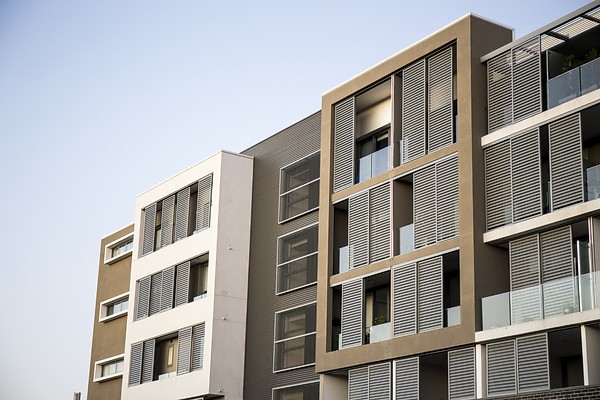
Short-Term Accommodation and Strata By-Laws on the NSW South Coast

Rules for holiday letting in Batemans Bay, Narooma, Bermagui and Merimbula
Short-term rental accommodation is part of everyday life on the NSW South Coast. In holiday destinations from Nowra, Jervis Bay and Ulladulla to Batemans Bay, Narooma, Bermagui, Merimbula and Eden, many strata schemes include a mixture of permanent residents, long-term tenants, holiday-home owners and short-stay visitors.
That mix can work well. Holiday letting supports local tourism and gives owners flexibility, while permanent residents bring stability and community. Problems usually arise when the rules are unclear, guests are not properly informed, complaints are handled inconsistently or an owners corporation attempts to impose a restriction that goes beyond what NSW strata law permits.
If you are searching for reliable information about Airbnb strata by-laws on the NSW South Coast, the key point is that no single rule applies in isolation. Short-term rental accommodation—often called STRA—is governed by a combination of NSW strata legislation, planning rules, fire-safety requirements, a mandatory code of conduct and the registered by-laws of the individual strata scheme.
This guide explains how those rules fit together and how South Coast owners corporations can protect residential amenity without making rushed or unenforceable decisions.
What is short-term rental accommodation in NSW?
The NSW Government generally describes short-term rental accommodation as a commercial arrangement that gives a person the right to occupy residential premises for no more than three months at a time. It commonly includes accommodation advertised through platforms such as Airbnb, Stayz and Booking.com, as well as bookings arranged directly by an owner or letting agent.
NSW planning rules distinguish between:
Hosted STRA, where the host resides on the premises while guests are staying; and
Non-hosted STRA, where the host does not reside on the premises during the stay.
An onsite building manager or concierge does not ordinarily turn an individual apartment booking into hosted STRA. The relevant question is whether the host resides at the premises during the accommodation period. The NSW Planning STRA framework provides the current definitions and planning requirements.
Can a strata scheme ban Airbnb or holiday letting in NSW?
An owners corporation may pass a by-law prohibiting a lot from being used for short-term rental accommodation when that lot is not the host's principal place of residence.
This power is contained in section 137A of the Strata Schemes Management Act 2015. It allows a scheme to restrict investors or holiday-home owners from using a lot for non-hosted short stays, provided the by-law is validly drafted, approved and registered.
However, the by-law cannot prevent STRA where the lot is the host's principal place of residence. For example, an owner-occupier may still be able to rent out their home while temporarily away or offer part of their residence, subject to planning laws, the mandatory Code of Conduct and the scheme's other valid by-laws.
This distinction is critical. A blanket statement that "Airbnb is banned in this building" may be legally inaccurate if it does not recognise the principal-place-of-residence protection.
Even where STRA cannot be prohibited, guests and hosts must still comply with valid rules concerning noise, parking, waste, occupancy, security and the use of common property.
Do South Coast holiday rentals have an annual day limit?
At the time of review, the NSW Government identifies a 180-day annual limit for non-hosted STRA in Greater Sydney, Ballina and certain land in the Clarence Valley and Muswellbrook areas. Separate limits apply in most of Byron Shire.
Most NSW South Coast council areas—including Shoalhaven, Eurobodalla and Bega Valley—are not currently identified on the NSW Planning website as locations subject to a specific non-hosted annual day cap under the exempt-development pathway. This means non-hosted STRA may generally operate throughout the year where all other planning conditions are satisfied.
That does not mean every South Coast apartment can automatically be used for holiday letting. Owners should still check:
the current NSW planning rules and STRA Register;
the registered by-laws for their strata scheme;
any development consent or property-specific restriction;
whether the dwelling is eligible for the exempt-development pathway; and
all applicable fire-safety and Code of Conduct requirements.
Planning controls can change. Before advertising a property, owners should check the current NSW Short-Term Rental Accommodation framework and contact the relevant local council if the planning status of the property is unclear.
STRA registration and fire-safety requirements
An eligible property must be registered on the NSW Government's Short-Term Rental Accommodation Register before it is advertised or offered for short-term rental. Registration must remain current and is renewed annually.
The NSW planning framework also applies minimum fire-safety standards to STRA dwellings. These requirements include appropriate smoke alarms and evacuation information, with the exact requirements depending on the type and layout of the premises.
Registration is not merely an administrative step. It confirms that the host has addressed the required safety standards and provides information that assists councils in monitoring planning compliance.
Strata committees should avoid assuming that the owners corporation is responsible for registering an individual lot. Registration is ordinarily the host's responsibility. However, a well-managed scheme should maintain a clear process for receiving host contact details, recording notifications and responding if an apparently unregistered holiday rental is identified.
What strata by-laws can regulate
Whether or not a scheme adopts a section 137A prohibition, carefully drafted by-laws can manage the practical effects of short-term accommodation.
Depending on the needs of the building, by-laws may address:
unreasonable noise and disruptive behaviour;
parking and the use of visitor spaces;
rubbish, recycling and bulky-waste disposal;
obstruction or misuse of hallways, lifts and entrances;
access to pools, barbecues, gyms and other shared facilities;
keys, swipe cards, garage remotes and building security;
damage to common property;
overcrowding and lawful occupancy limits; and
notification of a change in the use of a lot.
NSW Government guidance notes that an owners corporation may adopt an occupancy by-law limiting a lot to two adults per bedroom. Model by-laws may also require notification to the owners corporation at least 21 days before a lot's use changes to short-term rental accommodation. The precise wording and applicability should always be checked against the scheme's registered by-laws.
A by-law must not be harsh, unconscionable or oppressive, and it cannot conflict with strata or planning legislation. Rules should target identifiable conduct and building-management risks rather than treating every visitor as a problem.
How to introduce or update a short-term rental by-law
An owners corporation considering new Airbnb or holiday-letting rules should follow a proper governance process.
1. Review the existing registered by-laws
Do not rely on an old resident handbook, a notice in the foyer or an unregistered draft. The committee should first confirm which by-laws are currently registered and enforceable.
2. Identify the building's actual concerns
The right solution depends on the evidence. Is the problem late-night noise, overcrowding, security passes, visitor parking, rubbish, damage, pool access or an absence of emergency contacts? Clear problem definition leads to clearer by-laws.
3. Obtain appropriate legal drafting
Section 137A has an important principal-place-of-residence limitation. Generic wording copied from another scheme may be invalid or unsuitable. Essential Strata can coordinate the process, but legal drafting should be obtained where a new restriction or complex by-law is proposed.
4. Put the motion to a general meeting
Creating, changing or repealing a by-law requires a special resolution. Under current NSW guidance, that means no more than 25% of votes cast can be against the motion.
5. Allow for a sensible transition
Existing confirmed bookings should be considered. The NSW Government recommends managing the transition or giving the new by-law a future commencement date so affected owners and guests have reasonable notice.
6. Register the change
The consolidated by-laws must be lodged with NSW Land Registry Services within six months of approval. A change is not valid or enforceable until registered. The NSW Government guide to making and changing strata by-laws explains the process.
Host responsibilities in a South Coast strata scheme
The mandatory NSW Code of Conduct for the Short-Term Rental Accommodation Industry applies to hosts, guests, booking platforms, letting agents and facilitators.
For a host in a strata scheme, practical responsibilities include:
complying with planning laws and registered strata by-laws;
maintaining current STRA registration;
holding insurance that covers liability for third-party injury and death during the stay;
being contactable, or appointing a contactable representative, between 8 am and 5 pm every day;
remaining contactable for emergencies outside those hours;
giving guests the applicable strata by-laws and the Code of Conduct;
providing emergency plumbing, electrical and emergency-services contacts;
telling directly neighbouring residents and the owners corporation that the premises are being used for STRA;
supplying the host's or authorised representative's contact details; and
taking reasonable and timely steps to address complaints.
On the South Coast, local responsiveness is particularly important. A host living in Sydney, Canberra or interstate should have a reliable local representative who can attend the property when a lockout, water leak, noise complaint, parking issue or safety concern cannot be resolved remotely.
Guest conduct and common-property rules
Short-stay guests are not exempt from strata by-laws. Under the NSW Code of Conduct, guests must not create unreasonably disruptive noise, behave violently or threateningly, cause damage, or interfere unreasonably with another resident's use of common property. Guests are also responsible for the conduct of visitors they invite to the premises.
Hosts can reduce problems by giving every guest a short, building-specific arrival guide covering:
the correct lot and parking space;
visitor-parking restrictions;
quiet-use expectations;
pool, barbecue and common-facility hours;
rubbish and recycling arrangements;
fire exits and evacuation procedures;
key and swipe-card security;
balcony and smoking rules; and
the local contact for urgent problems.
The purpose is not to overwhelm visitors with legal language. It is to make compliance easy before an issue occurs.
How strata committees should manage complaints
Holiday periods can create repeated reports about noise, parking and common-property use. A consistent evidence-based process is more effective than emotional email chains or assumptions about which lot is responsible.
Record useful information
Ask complainants to provide the date, time, location, duration and nature of the incident. Photos, lawful security footage, witness statements, correspondence and incident numbers may be relevant. Records should be factual and stored securely.
Contact the host or authorised representative
Many issues can be resolved quickly when the host has accurate details and a clear request. The Code requires a host to take reasonable, timely steps when concerns are raised.
Use the correct enforcement pathway
For an alleged strata by-law breach, the owners corporation may begin with informal communication or a warning. If the conduct continues, a formal notice to comply may be considered. Further action may involve NSW Fair Trading mediation or an application to the NSW Civil and Administrative Tribunal. The NSW Government strata disputes guide outlines the usual pathway.
Refer urgent or external matters appropriately
Contact NSW Police for criminal activity, threats or urgent noise matters.
Contact the local council about planning compliance, fire safety, parking regulation or ongoing neighbourhood noise within its jurisdiction.
Report potential Code of Conduct breaches through the NSW Fair Trading STRA complaint process.
Report breaches of registered strata by-laws to the owners corporation or strata manager.
The strata manager is not the police, emergency service or local planning authority. Good management means directing each issue to the body with the legal power to act while keeping appropriate scheme records.
A practical South Coast STRA management checklist
For mixed resident and visitor communities, the following approach can reduce conflict:
Confirm that the scheme holds its current consolidated registered by-laws.
Review whether existing noise, parking, waste and common-property rules are adequate.
Decide whether a section 137A by-law is appropriate for non-principal-residence lots.
Obtain legal drafting and pass any change by special resolution.
Register approved changes within six months.
Maintain a confidential register of known STRA lots and host contacts where information is provided.
Give hosts a standard building-information pack for guests.
Use one documented complaint and escalation process for every lot.
Review incident patterns after peak summer, Easter and school-holiday periods.
Update owners when legislation, planning rules or the scheme's needs change.
Why local strata management matters
Short-term accommodation is not purely a compliance issue. It is a community-management issue that requires balanced communication between owner-occupiers, investors, tenants, holiday-home owners, local agents and visitors.
Essential Strata Management supports owners corporations across the NSW South Coast, including Nowra, Jervis Bay, Ulladulla, Batemans Bay, Moruya, Narooma, Bermagui, Bega, Tathra, Merimbula, Pambula and Eden.
Our role is to help committees understand their options, maintain accurate records, coordinate properly drafted by-laws, communicate expectations and follow a fair enforcement process. Learn more about our South Coast strata management services, explore our strata FAQs, or contact Essential Strata Management to discuss your scheme.
Frequently asked questions about Airbnb strata by-laws in NSW
Can our NSW strata scheme completely ban Airbnb?
It may prohibit STRA in a lot that is not the host's principal place of residence, provided a valid section 137A by-law is passed by special resolution and registered. It cannot use that power to prevent STRA where the lot is the host's principal place of residence.
Do Airbnb guests have to follow strata by-laws?
Yes. Guests must comply with applicable by-laws and the mandatory NSW Code of Conduct. Hosts must provide guests with the by-laws applying to the premises and common property.
Is Airbnb limited to 180 days on the NSW South Coast?
Most South Coast LGAs are not currently listed by the NSW Government as locations subject to the 180-day non-hosted STRA cap. Property owners should nevertheless confirm the current planning controls, development consent, eligibility requirements and registered strata by-laws before advertising.
Does a South Coast Airbnb need to be registered?
Yes, eligible STRA premises must generally be registered on the NSW Planning Portal before being advertised or offered, and registration must be renewed annually.
Can a strata scheme impose an occupancy limit?
An owners corporation may adopt a by-law limiting occupancy to two adults per bedroom. The scheme should obtain advice on appropriate drafting and registration.
Who should residents contact about a noisy holiday rental?
Report a strata by-law concern to the strata manager or owners corporation. Contact the host or authorised representative if details have been supplied. Urgent noise, threats or criminal behaviour should be referred to NSW Police, while ongoing planning, fire-safety or council-regulated matters may be referred to the local council.
Can a strata manager evict short-stay guests?
No. A strata manager does not have a general power to evict guests. The manager can act within delegated authority, communicate with the host, issue or arrange notices where legally authorised, keep records and help the owners corporation use the appropriate enforcement pathway.
Should every South Coast scheme ban short-term accommodation?
Not necessarily. Each building has a different location, resident profile, design and history. Some schemes need a targeted prohibition for non-principal-residence lots; others can manage impacts through clear conduct, parking, waste, security and common-property by-laws. The decision should be informed, lawful and supported by the owners corporation.
Need help managing short-term accommodation and strata by-laws on the NSW South Coast? Contact Essential Strata Management for local, practical and transparent strata management support.
The following official resources support the legislative and regulatory information in this article:
NSW Government - Short-term rental accommodation
NSW Planning - Short-term rental accommodation framework
NSW Legislation - Strata Schemes Management Act 2015, section 137A
NSW Government - Strata by-laws
NSW Government - Code of Conduct for the Short-Term Rental Accommodation Industry
NSW Government - Host obligations
NSW Government - Guest obligations
NSW Planning Portal - STRA Register
NSW Government - Strata disputes
General information only: This article has been prepared by ETSM and Essential Strata Management for general information and educational purposes only. It does not constitute legal, financial, insurance, building, taxation or other professional advice. NSW strata legislation, regulations and industry requirements may change, and their application will depend on the circumstances of each strata scheme. While reasonable care has been taken to ensure the information was accurate at the time of publication, readers should obtain independent professional advice relevant to their circumstances before acting on this information.