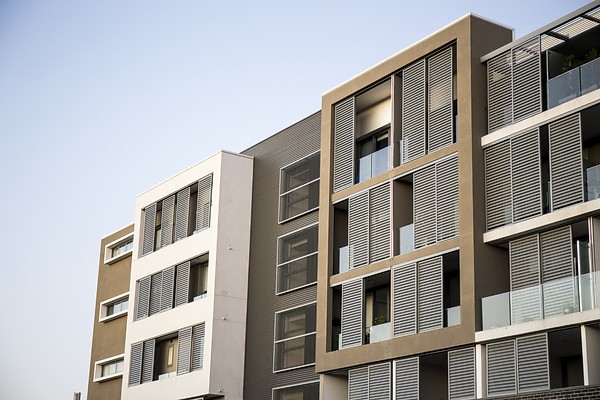
Annual Fire Safety Statements for Randwick, Kingsford and Maroubra Strata
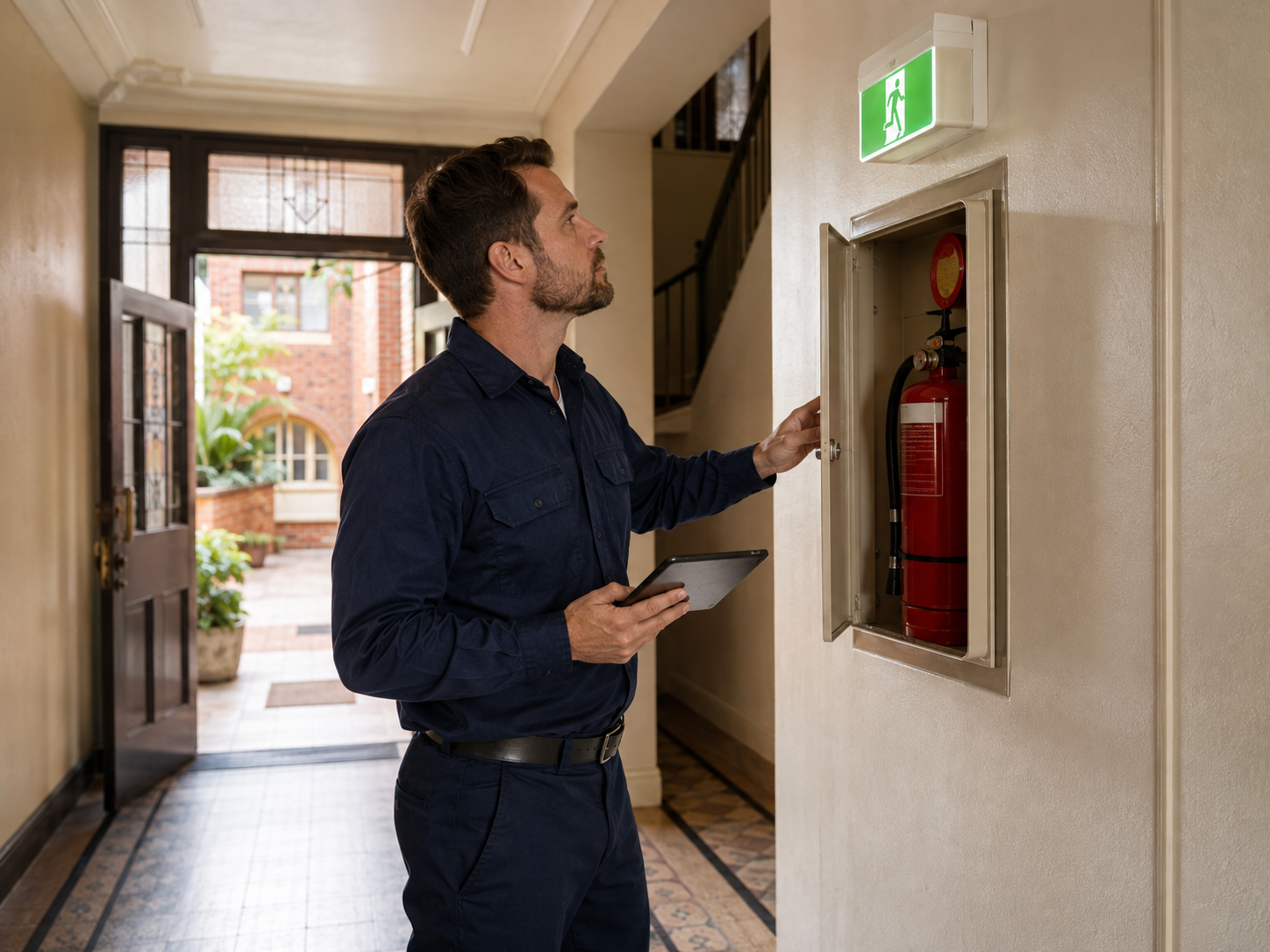
Compliance responsibilities for owners corporations in older apartment buildings
Annual Fire Safety Statements can look like routine paperwork until an older apartment building fails an inspection shortly before its due date. A fire door does not close, emergency lighting does not operate for the required duration, a service penetration has compromised a fire-resisting wall, or the practitioner discovers that the building's Fire Safety Schedule does not match the measures actually installed. The owners corporation is then dealing with a safety issue, a statutory deadline and an unplanned repair bill at the same time.
This situation is especially relevant across Randwick, Kingsford and Maroubra. The area contains Inter-War flat buildings, post-war brick walk-ups, mixed-use shop-top properties, larger residential complexes and later apartment developments. Some have been altered repeatedly over decades. Doors have been replaced, garages enclosed, communications cables installed, security systems upgraded and internal layouts changed. Even modest work can affect a fire door, an exit path, a smoke alarm system or the integrity of a fire-rated element.
An Annual Fire Safety Statement, commonly shortened to AFSS, is not simply a receipt showing that a contractor visited. It is a formal statement issued by or on behalf of the building owner after relevant essential fire safety measures have been inspected and assessed by appropriately accredited practitioners. For a strata scheme, the building owner is ordinarily the owners corporation. A strata manager may coordinate the process under delegated authority, but the statutory responsibility does not disappear because administration has been outsourced.
Key point: An Annual Fire Safety Statement is the final verification point in a year-round maintenance cycle. Older strata buildings need an accurate Fire Safety Schedule, timely defect repairs and complete service records.
The strongest approach is to treat the AFSS as a twelve-month compliance cycle rather than a last-minute certificate. That means confirming the correct Fire Safety Schedule, appointing properly accredited practitioners, maintaining every listed measure, rectifying defects early, managing access and records, lodging the completed statement with both Randwick City Council and Fire and Rescue NSW, and displaying the required documents at the building.
What an Annual Fire Safety Statement actually confirms
An AFSS confirms that each essential fire safety measure applying to the building has been assessed and found capable of performing to the required standard specified for that measure. It also confirms that an accredited practitioner has inspected the building's exit systems and found them compliant with the relevant regulatory requirements.
The measures are not guessed from a generic checklist. They come from the building's current Fire Safety Schedule. Depending on the property, the schedule may list items such as:
- automatic fire detection and alarm systems
- smoke alarms or heat detection systems
- emergency lighting and illuminated exit signs
- fire doors, smoke doors and associated hardware
- fire hydrants and fire hose reels
- portable fire extinguishers and fire blankets
- paths of travel to exits and required exits
- fire-resisting construction and protection of openings
- smoke hazard management or mechanical air-handling controls
- warning, communication or occupant alert systems
- sprinkler systems, pumps, tanks or booster assemblies
- other measures nominated in the schedule for that building.
Not every apartment block has every measure. A small older walk-up may have a relatively short schedule, while a mixed-use or multi-storey development can have a much more complex set of systems. The applicable standard may also differ between measures and between buildings. That is why copying last year's contractor checklist without first checking the current Fire Safety Schedule can create a serious compliance gap.
The annual statement differs from a fire safety certificate issued for completed building work. A supplementary statement may also be required more frequently where the schedule identifies a critical measure.
Why older Eastern Suburbs apartment buildings need closer preparation
Age alone does not prove that a building is unsafe. The challenge is that its compliance history can be fragmented across original approvals, later building work, former managers and multiple contractors.
- Older buildings commonly present one or more of the following complications:
- a missing, incomplete or illegible Fire Safety Schedule
- several versions of a schedule with uncertainty about which is current
- legacy measures described under older terminology or standards
- doors or hardware replaced without preserving the required fire performance
- unsealed cable, pipe or duct penetrations through fire-resisting construction
- storage, security gates, screens or furniture reducing an exit path
- plant rooms, meter cupboards and garages accumulating combustible material
- corrosion, water entry or impact damage affecting fire equipment
- additions and renovations that were not coordinated with the building-wide fire strategy
- inconsistent maintenance records or defects carried forward year after year.
An AFSS does not automatically require every old building to be rebuilt to the latest National Construction Code. Each listed measure is assessed against its applicable performance standard. However, hazards, unauthorised changes, a missing schedule or serious deficiencies may require further investigation, and Council can exercise separate enforcement powers. Building age does not excuse a non-performing measure.
The important 2026 change: AS 1851-2012 maintenance
From 13 February 2026, NSW building owners are legally required to ensure that maintenance activities for essential fire safety measures covered by AS 1851-2012 are carried out in accordance with that standard, unless an applicable performance solution specifies another maintenance pathway. This is a material operational change for owners corporations.
AS 1851-2012 addresses routine servicing of fire protection systems and equipment. It establishes inspection, testing, preventive maintenance and record-keeping activities at specified frequencies. The AFSS remains annual, but many underlying maintenance activities are monthly, six-monthly or otherwise periodic. A contractor attending once near the annual due date cannot retrospectively create a year of compliant routine service records.
Measures not covered by AS 1851-2012 must be maintained to the standard specified in the Fire Safety Schedule or, where relevant, their original design standard. Ask the contractor and practitioner to identify the pathway and required evidence for each measure.
The practical consequences include reviewing maintenance contracts, confirming service frequencies, clarifying defect-reporting responsibilities and keeping site records organised. NSW guidance also emphasises that identified defects should be rectified promptly so systems and equipment remain operational. The annual deadline should therefore be the final verification point in a continuous maintenance program, not the starting gun for repairs.
Fire safety considerations in Randwick
Randwick has a layered building history. Around Randwick Junction, High Cross, Belmore Road, Avoca Street, Alison Road and the streets extending toward Coogee, older residential buildings sit alongside hospitals, educational facilities, shops and newer apartment developments. Council heritage material identifies Victorian, Federation and Inter-War buildings within local conservation areas, including Inter-War flat buildings around High Cross.
Older Randwick blocks may have narrow side passages, original timber fabric, small landings and later security doors. Heritage status does not remove fire obligations, but upgrades affecting significant fabric may need coordinated heritage and planning advice.
Keep brigade access, hydrants and booster areas clear. Confirm keys and access to rooftops, garages, plant rooms and service cupboards before inspection day because an inaccessible measure cannot be properly assessed.
Randwick City Council maintains a searchable database of properties known to have a Fire Safety Schedule and an AFSS due date. If a property cannot be found, that does not itself prove that no obligation exists. Council explains that some older buildings may not appear because they have not been captured through a relevant approval, certificate or fire safety order since 1 July 1988. The appropriate step is to contact Council's Fire Safety Team and review the building's approval records rather than make an assumption.
Fire safety considerations in Kingsford
Kingsford includes older walk-up flats on residential side streets, apartment buildings around Gardeners Road and a changing mix of residential and commercial uses along the Anzac Parade corridor. The light rail terminus, university catchment and concentration of shops and services contribute to frequent tenant turnover and building access demands.
Mixed-use and shop-top buildings need particular coordination because residential occupants, commercial tenants, exhaust systems, loading areas and security arrangements may share exits or fire services. Responsibilities for access, base-building systems and maintenance evidence should be recorded.
Repeated telecommunications, electrical and plumbing work can leave penetrations through fire-resisting walls or floors. A neat seal is not necessarily compliant. Require product and installation evidence when work occurs rather than reconstructing it years later.
Security upgrades also deserve attention. Gates, intercom-controlled doors and deadlocking hardware must not prevent occupants from using required exits. Residents may value increased security, but an exit door that needs an unavailable key or fails to release as required can become an AFSS defect and a life-safety issue. Fire safety and security contractors should work to a coordinated scope.
Fire safety considerations in Maroubra
Maroubra covers a broad area, from the larger apartment and mixed-use buildings around Maroubra Junction and Anzac Parade to post-war walk-ups, townhouse developments and coastal blocks extending toward Maroubra Beach and South Maroubra. The fire safety measures and access conditions can vary significantly between those building types.
Around Maroubra Junction, schemes may manage lifts, basements, commercial premises and complex alarm or hydrant infrastructure. Smaller coastal walk-ups may have simpler schedules, but external cabinets, door components and signage still require deliberate inspection for weather-related deterioration.
Long driveways, split levels and locked garages can complicate access. Walk the property from the perspective of residents leaving and firefighters arriving; bins, bicycles, furniture and building materials must not obstruct exits or equipment.
Larger schemes also need clear communication. A missed apartment, inaccessible balcony service or locked common room may require a return visit and delay certification. Notices should explain that the inspection is a statutory building-safety activity, identify the access window and provide a process for residents who cannot attend.
Who is responsible in a strata scheme?
Where the owners corporation is the building owner, it is responsible for ensuring the AFSS process is completed. The strata committee should oversee the compliance calendar, approve appropriate contractors and repairs, monitor expenditure and ensure decisions are recorded. The strata managing agent can obtain proposals, issue work orders, coordinate access, maintain records and lodge documents where its agency agreement and delegation permit.
An accredited practitioner performs the specialist assessment and endorses the measures for which they hold the relevant accreditation. Accreditation should be checked for each function, not merely for the practitioner's business name. Some buildings need more than one practitioner because no single person is accredited for every measure.
Routine service work does not automatically authorise a technician to endorse a measure. Distinguish the maintenance contractor, repair contractor, accredited assessor and person authorised to issue the statement.
Individual owners and tenants must cooperate with access requirements and avoid interfering with safety systems or exits. Renovation approvals should require appropriate fire-stopping, door and services documentation. A lot renovation can create a building-wide problem if it compromises common-property fire separation or an exit system.
A reliable twelve-month AFSS workflow
1. Confirm the due date and current schedule
Check Randwick City Council's active essential-services search and the scheme's records. Locate the current Fire Safety Schedule, previous AFSS, practitioner endorsements, maintenance logbooks, defect reports and relevant approvals. Resolve inconsistent schedules early with Council or an appropriately qualified fire safety professional.
2. Review the previous year's defects
Do not assume last year's signed statement means every item remains satisfactory. Review recommendations, temporary repairs, exclusions and recurring faults. Confirm that repairs were completed and supporting invoices, certificates, photographs or product evidence were retained.
3. Appoint practitioners with the right accreditation
Select practitioners accredited for their assigned measures. Confirm scope, insurance, access, reporting, exclusions and lead time, and retain evidence of appointment.
4. Align routine servicing with AS 1851-2012
Ensure the maintenance agreement reflects the mandatory requirements applying from 13 February 2026. Confirm the service frequencies for each system, where records will be kept, who reports defects, who authorises repairs and how missed visits will be recovered.
5. Conduct an early pre-assessment
For older or historically difficult buildings, arrange the main assessment well before the due date. Eight to twelve weeks can be a sensible operational allowance where access, specialist parts, committee approval or building work may be required. This is planning guidance, not a statutory extension.
6. Triage defects by risk and lead time
Life-safety failures and non-operational systems require immediate attention. Other defects may still prevent endorsement and need prompt repair. Obtain a written defect register that identifies location, measure, required action, responsible contractor, approval status and target completion date.
7. Control repair work and documentation
Use suitably qualified contractors and require appropriate evidence. Fire doors, fire-stopping, alarm interfaces and mechanical controls are not suitable for undocumented substitutions.
8. Arrange reassessment and complete the approved form
Once defects are rectified, the accredited practitioner must verify the relevant measures. Ensure every measure on the current schedule is addressed, practitioner details and signatures are complete, dates are consistent and the person issuing the statement has proper authority on behalf of the owners corporation.
9. Lodge with both authorities and display the documents
The completed AFSS and current Fire Safety Schedule must be submitted to Randwick City Council and a copy provided to the Commissioner of Fire and Rescue NSW. A current copy must also be prominently displayed in the building. Keep proof of both lodgements with the strata records.
10. Start the next cycle immediately
Update the compliance register, contracts, budget forecast and defect plan. Record the next due date and schedule reminder points throughout the year. The best time to prevent next year's emergency is immediately after this year's statement is lodged.
Common failures that delay an AFSS
- Several problems recur across older strata buildings:
- the inspection is booked only days before the due date
- the contractor is given an outdated Fire Safety Schedule
- maintenance and AFSS assessment roles are confused
- the selected person lacks accreditation for a listed measure
- fire doors are wedged open, damaged or fitted with unsuitable hardware
- exit signs or emergency lights fail testing
- storage, bins or security arrangements obstruct paths of travel
- penetrations through fire-rated elements lack compliant treatment or evidence
- hydrant, hose reel, extinguisher or booster access is obstructed
- recurring water entry or corrosion damages equipment
- defects are quoted but committee approval is delayed
- the statement is sent to Council but not Fire and Rescue NSW
- the current statement and schedule are not displayed at the premises.
- These are management failures as much as technical failures. A good calendar, clear delegation and documented escalation process can prevent many of them.
What happens if the statement cannot be completed on time?
Randwick City Council states that it has no regulatory authority to vary or extend an AFSS due date. It also warns that failing to submit a fully completed statement to both Council and Fire and Rescue NSW is an offence and may result in a penalty notice of up to $4,000.
If a deadline is at risk, the owners corporation should not lodge an inaccurate or unsupported statement. It should obtain immediate advice from the accredited practitioner, notify the committee, authorise urgent rectification within delegated spending limits and communicate transparently with Council. Depending on the defect, interim controls may also be required to protect occupants while permanent work is arranged.
Paying a penalty does not certify the building or remove the underlying duty. The defensible response is early action, accurate records and properly authorised remediation.
Budgeting and capital planning for older buildings
Routine servicing, annual assessments, lodgement fees and minor consumables should be included in the administrative budget. Larger replacement or upgrade projects may belong in the capital works plan. Examples include replacing multiple fire doors, upgrading an alarm panel, renewing emergency lighting, repairing hydrant infrastructure or completing extensive fire-stopping work.
Committees should avoid budgeting only from last year's invoice. An ageing system can move from routine service to major renewal, and a missing schedule or newly identified defect can create professional and approval costs. A realistic allowance should consider practitioner fees, servicing, access, specialist testing, repairs, certification, contingency and any project-management or design input.
Where a large project emerges, the committee should obtain a clear scope and understand the decision-making authority required under strata legislation. Urgent safety work may need immediate action, but the owners corporation should still keep resolutions, quotations, reports and reasons for decisions on file.
Nine frequently asked questions
1. Does every older apartment building need an AFSS?
Not automatically. The obligation generally applies where the building has essential fire safety measures governed by a Fire Safety Schedule. Randwick Council maintains a database of known properties and due dates, but an absent search result does not conclusively remove the obligation. Check the building records and contact Council's Fire Safety Team if the position is unclear.
2. Who is responsible for the AFSS in a strata building?
The owners corporation is ordinarily responsible where it is the building owner. A strata manager may coordinate and lodge the statement under proper authority, while accredited practitioners assess and endorse the relevant measures. Delegating administration does not transfer the owners corporation's underlying responsibility.
3. When is the AFSS due?
It is generally due each year by the date recorded for the building. Randwick Council provides an online search for active essential services and due dates. Do not calculate the deadline only from a contractor's visit date; verify the official due date and start preparation well in advance.
4. Can Randwick City Council grant an extension?
Council expressly states that it has no regulatory authority to vary or extend the due date. If defects threaten the deadline, escalate them immediately rather than relying on a future extension.
5. Can our usual fire-service technician sign every measure?
Only if that person holds the relevant accreditation for each assessment function. A business may employ several practitioners with different accreditation categories. Confirm the individual practitioner's accreditation and scope rather than assuming that routine servicing qualifications are sufficient.
6. Does an AFSS force an old block to meet every current building-code requirement?
Not automatically. Measures are assessed against the standard of performance applying to them, usually as recorded in the current Fire Safety Schedule. Separate upgrade obligations may arise from approved building work, a fire safety order, a performance solution or other legal requirements. Obtain building-specific advice before assuming either a full upgrade or an exemption.
7. What if the Fire Safety Schedule is missing or appears wrong?
Do not invent a replacement list or reuse another building's schedule. Search Council's records, review approvals and contact Randwick Council's Fire Safety Team. A qualified fire safety professional may be needed to reconcile measures and advise on the pathway for a corrected or reissued schedule.
8. What changed under AS 1851-2012 in February 2026?
From 13 February 2026, maintenance activities for essential fire safety measures covered by the standard became mandatory in NSW, unless an applicable performance solution specifies another approach. This creates recurring servicing and record-keeping duties throughout the year, not just at annual statement time.
9. How can ETSM assist an owners corporation?
ETSM can maintain the compliance calendar, obtain proposals, confirm committee instructions, coordinate access, track reported defects, arrange approved repairs, retain documents and facilitate lodgement under the agency agreement. ETSM does not replace the accredited practitioner and does not independently certify fire safety measures.
A practical committee checklist
- Before the next AFSS due date, the strata committee should be able to answer yes to these questions:
- Do we know the verified Council due date?
- Do we hold the current Fire Safety Schedule?
- Is every listed measure included in the maintenance and assessment scope?
- Are the appointed practitioners accredited for their assigned measures?
- Does our servicing program comply with the requirements applying from 13 February 2026?
- Are maintenance logbooks and defect records complete and accessible?
- Have recurring defects from last year been permanently addressed?
- Is inspection access arranged for every relevant common area and system?
- Is there enough time and delegated authority to approve rectification?
- Will the final statement go to Council and Fire and Rescue NSW and be displayed onsite?
- If several answers are no, the scheme has a governance issue before it has a deadline issue. The committee should create an action register and allocate responsibilities immediately.
Better fire compliance starts with organised strata management
For older apartment buildings in Randwick, Kingsford and Maroubra, fire safety compliance sits at the intersection of building history, contractor capability, resident access, committee decisions, record keeping and statutory deadlines. The AFSS is the annual evidence of that system, not a substitute for it.
A well-managed owners corporation knows its schedule, maintains measures throughout the year, acts on defects early and gives accredited practitioners enough time to complete proper assessments. It also understands the local process: verify the due date with Randwick City Council, lodge the approved statement with both required authorities and keep current documents displayed at the building.
ETSM provides strata management across Randwick, Kingsford, Maroubra and the wider Eastern Suburbs. We can help committees establish a reliable compliance calendar, coordinate qualified service providers, organise access and approvals, and keep the paper trail needed for accountable decision-making. If your current AFSS process begins with a panic shortly before expiry, it is time to replace the annual scramble with a planned twelve-month system.
Suggested website calls to action
Primary CTA: Need better coordination of your building's Annual Fire Safety Statement? Speak with ETSM about proactive strata management in Randwick, Kingsford and Maroubra.
Secondary CTA: Request an ETSM strata management proposal for your Eastern Suburbs owners corporation.
For local support coordinating fire-safety contractors, access arrangements and owners corporation records, explore our strata management services in Randwick and Maroubra.
Authoritative references
Randwick City Council - Fire safety certificates and statements: https://www.randwick.nsw.gov.au/planning-and-building/building/fire-safety/statements-and-certificates
Randwick City Council - Online services directory and active essential-services search: https://www.randwick.nsw.gov.au/services/online-services-directory
NSW Planning - Fire safety certification: https://www.planning.nsw.gov.au/the-planning-system/buildings/fire-safety-in-buildings/fire-safety-certification
NSW Building Commission - Responsibilities of building owners under AS 1851-2012: https://www.nsw.gov.au/departments-and-agencies/building-commission/industry-changes/as1851-2012/responsibilities-of-building-owners-under-as-1851-2012
NSW Government - Safety rules for strata common property: https://www.nsw.gov.au/housing-and-construction/strata/serving-on-a-committee/safety
NSW Government - Fire safety practitioner requirements and accreditation: https://www.nsw.gov.au/housing-and-construction/compliance-and-regulation/fire-safety-practitioners
Fire and Rescue NSW - Lodge a fire safety statement: https://www.fire.nsw.gov.au/fire-safety/building-fire-safety/service-type-tool/lodge-a-fire-safety-statement
Environmental Planning and Assessment (Development Certification and Fire Safety) Regulation 2021, including sections 81 and 89: https://legislation.nsw.gov.au/view/html/inforce/current/sl-2021-0689
Randwick City Council - Randwick City heritage material: https://www.randwick.nsw.gov.au/planning-and-building/heritage-conservation
Disclaimer: This article provides general information for NSW strata communities and is not legal, engineering, certification or fire-safety advice. Requirements depend on the building's approvals, current Fire Safety Schedule, systems and circumstances. Owners corporations should obtain advice from appropriately accredited practitioners, qualified consultants, Randwick City Council and legal advisers where required.