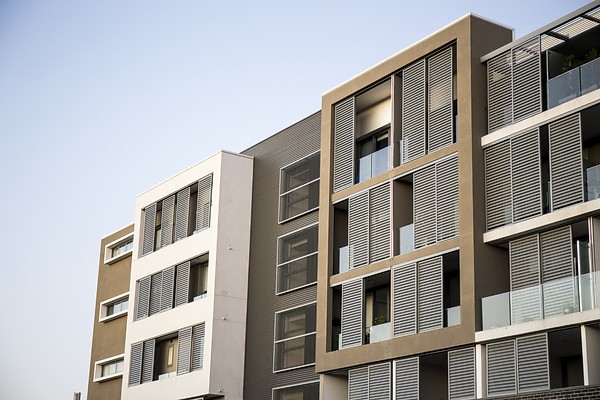
Fire Safety Compliance for Batemans Bay Strata Schemes
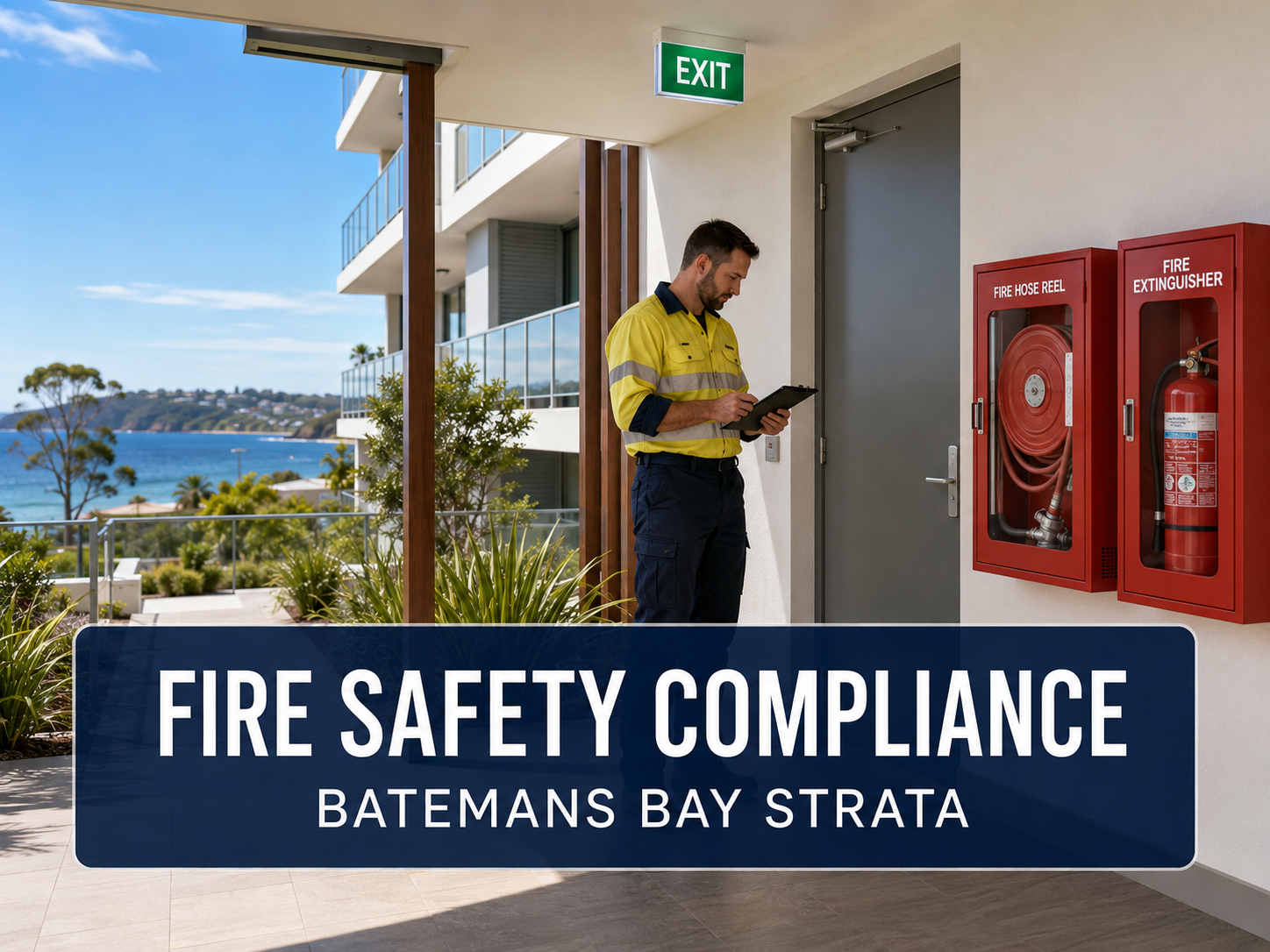
Essential fire-safety responsibilities for Eurobodalla owners corporations
Fire safety compliance in Batemans Bay strata schemes is not a once-a-year form-filling exercise. It is an ongoing owners corporation responsibility involving the building's fire safety schedule, routine inspection and testing, prompt management of defects, accurate records, annual certification and clear communication with residents.
For applicable NSW buildings, an important change is already in force: from 13 February 2026, covered essential fire safety measures must be inspected and tested in accordance with AS 1851-2012, unless a relevant performance solution specifies another standard. Owners must also retain the prescribed records for at least seven years and make them available for inspection.
Important: not every strata scheme requires an Annual Fire Safety Statement. Building classification, approvals and the existence of a fire safety schedule matter. Class 1a townhouses, villas, detached houses and row houses, and Class 10 structures, are among the building types that may not require a statement. Confirm the position for the actual property with Eurobodalla Council or a qualified fire-safety adviser.
Why this matters for Batemans Bay and Eurobodalla strata
Batemans Bay has a varied strata market: apartment buildings, mixed residential and commercial properties, holiday accommodation, older walk-up blocks, townhouses and schemes over common basements. Their legal obligations are not identical. A small Class 1a villa scheme may have a different pathway from a Class 2 apartment building with fire doors, hydrants, hose reels, alarms, emergency lighting or a sprinkler system.
Local operating conditions also deserve practical attention. Coastal exposure can contribute to corrosion of external cabinets, door hardware and other exposed components. Holiday letting and seasonal occupancy can mean more resident turnover, more access coordination and a greater need for simple instructions about exits and alarms. These factors do not change the statutory standard, but they can affect how reliably a scheme maintains evidence, organises access and closes out defects.
The compliance framework in plain English
Requirement, What it means
Owners corporation action
Fire Safety Schedule (FSS)
The building-specific list of essential and critical measures, their required performance standards and any performance solutions.
Keep the current schedule, check it before engaging assessors and do not substitute a generic equipment list.
Routine servicing
Inspection, testing, preventive maintenance and survey at the intervals applying to each covered measure.
Use competent service providers and ensure AS 1851-2012 is followed from 13 February 2026 where required.
Annual Fire Safety Statement (AFSS)
The yearly statement for applicable buildings confirming assessment of scheduled measures and inspection of exit systems.
Appoint appropriately accredited practitioners, resolve certification issues and lodge on time.
Supplementary statement
A more frequent statement for any critical fire safety measure identified in the schedule.
Check the schedule for the required frequency and, where practical, coordinate with the annual cycle.
Lodgement and display
The statement must go to the relevant council and Fire and Rescue NSW and be displayed with the current schedule.
Retain proof of both lodgements and keep the displayed copy current and legible.
Records
AS 1851-2012 records must be retained for at least seven years; government guidance also requires the physical logbook on site.
Keep the hard-copy logbook protected and accessible, supported by a digital document register and contractor reports.
The fire safety schedule is the source of truth
The first document to locate is the current fire safety schedule. It should identify each essential fire safety measure, the minimum performance standard, any critical measures and relevant performance solutions. It may have been issued with a development consent, construction certificate, complying development approval or fire safety order.
Do not assume that equipment visible during a walk-through is the complete schedule. Conversely, a historical schedule may contain descriptions or standards that need professional interpretation. If the schedule is missing or appears incorrect, Eurobodalla Council explains that Council or the principal certifier may be able to reissue it in specified circumstances. The owners corporation should seek the proper statutory pathway rather than creating its own replacement list.
Common measures found in strata buildings
The exact list is building-specific, but a schedule may include measures such as:
– automatic fire detection and alarm systems
– automatic fire suppression systems, including sprinklers
– fire hydrant systems and fire hose reels
– portable fire extinguishers and fire blankets
– fire doors, smoke doors and associated hardware
– emergency lighting and illuminated exit signs
– smoke control, mechanical air-handling shutdowns or stair pressurisation
– fire-isolated stairs, paths of travel and exit systems
– fire seals and other passive fire protection
– warning and intercommunication systems or other measures listed for that building.
A useful technical distinction is that AS 1851-2012 does not cover every possible essential measure. NSW Government guidance gives emergency exit lighting as an example. Measures not covered by AS 1851-2012 must still be maintained to the standard in the schedule or their original design standard.
Servicing, assessment and certification are different jobs
Routine servicing keeps systems operational throughout the year. The AFSS assessment verifies that scheduled measures can perform to the required standard. The statement records the statutory outcome. The people involved may not all be the same, and accreditation for one measure does not necessarily cover another.
Eurobodalla Council states that only FPAA-accredited practitioners may carry out accredited-practitioner functions covered by the approved scheme. For functions not currently covered by an accreditation category, the building owner or certifier must determine whether the person is appropriately qualified. The scheme should verify scope, accreditation, licences, insurance and independence before appointment.
The 2026 AS 1851-2012 change
From 13 February 2026, all new and existing Class 1b and Class 2 to Class 9 buildings in NSW must have covered essential fire safety measures inspected and tested in accordance with AS 1851-2012, unless a performance solution specifies another standard. Townhouses over a common basement may be Class 2 and can fall within the requirement.
For an existing building, the reform does not require every historical long-duration service interval to be completed immediately on commencement. NSW Government guidance says service intervals can begin from 13 February 2026, with the first yearly service expected by February 2027. Missing baseline data will often be recorded as a non-critical defect or non-conformance rather than automatically becoming a critical defect. The practitioner should classify the finding and advise what action is needed.
Seven-year records and the on-site logbook
Building owners must keep records in the manner prescribed by AS 1851-2012 for at least seven years and make them available for inspection. Current NSW Government guidance says a hard-copy logbook must be left on site after testing; an electronic register does not yet replace that physical logbook.
A sound strata file should also retain the fire safety schedule, previous statements, assessment reports, service reports, defect quotations, completed-work evidence, contractor credentials, council correspondence, Fire and Rescue NSW submission receipts and committee or general-meeting decisions. If the service contractor changes, hand over the existing logbook rather than starting an unexplained new record.
What to do when defects are reported
A defect report should not disappear into an email chain. The strata committee needs a clear register showing the measure, location, classification, safety impact, recommended work, responsible contractor, approval status, target date and completion evidence.
Escalate immediately to the practitioner and owners corporation, apply any safety controls and obtain urgent qualified advice and rectification.
Written notification, interim control, approval, work order and close-out evidence.
Non-critical defect
Obtain scope and cost, prioritise reasonably and track through to completion; do not leave it unowned.
Defect register, decision, target date and completion report.
Non-conformance or missing baseline data
Ask the practitioner what evidence or investigation is required and whether the issue affects performance or certification.
Advice, document search, investigation scope and agreed next action.
Schedule inconsistency
Seek advice from the assessor, certifier or Council about the correct formal pathway.
Current schedule, correspondence and any reissued statutory document.
NSW Government guidance states that the 2026 reforms do not require every non-conformance or non-critical defect to be resolved immediately. That is not permission to ignore them. The owners corporation should act on qualified advice, document risk and funding decisions, and keep the issue visible until it is closed.
Avoid common fire-safety failures
– treating the AFSS as a once-a-year contractor task instead of an owners corporation compliance system
– engaging one provider without checking whether its accreditation covers every scheduled measure
– using the previous AFSS as a substitute for the current fire safety schedule
– letting the annual due date arrive before access, quotations or rectification have been organised
– accepting vague reports that do not classify defects or identify the required standard
– relying only on an online portal and failing to keep the required physical logbook on site
– propping open fire or smoke doors, blocking stairs or storing goods in required paths of travel
– failing to retain proof that documents were sent to both Council and Fire and Rescue NSW
– assuming an AFSS automatically satisfies bushfire planning, smoke-alarm or emergency-planning obligations
– deferring essential work because it was not allowed for in the administrative or capital works budget.
Resident behaviour is part of the control system
Even well-maintained equipment can be undermined by day-to-day behaviour. Fire and Rescue NSW warns residents not to chock open fire-stair doors and to keep exits clear. Apartment residents should know the building's exits, use stairs rather than lifts during a fire, maintain working smoke alarms in their homes and practise a household escape plan.
For buildings with permanent residents, tenants and short-stay occupants, concise signage and induction information can reinforce building-specific rules: do not obstruct corridors, do not interfere with alarms or doors, report damaged equipment promptly and follow the approved evacuation instructions.
Bushfire preparedness is related, but separate
Batemans Bay and surrounding Eurobodalla communities understand bushfire risk. An AFSS deals with scheduled building fire-safety measures; it does not by itself create a bushfire survival plan or satisfy every development-consent condition. Schemes on or near bushfire-prone land should check their approvals and obtain appropriate advice about evacuation, shelter, access, vegetation, asset protection and resident communication. NSW Rural Fire Service guidance should inform any bushfire-specific plan.
Budgeting and insurance
Routine servicing, annual assessment and lodgement costs should be forecast as recurring expenditure. Rectification, major equipment renewal, passive-fire investigations and system upgrades may require separate funding and may belong in the capital works fund plan. Where urgent safety work is identified, the committee should obtain advice on authority, quotations and any required general-meeting approval without allowing governance delay to create avoidable risk.
Notify the insurer or broker where required by the policy, particularly after a significant defect, fire safety order, system impairment or material change to the building. Certification is not a substitute for insurance disclosure, and insurance does not remove the owners corporation's maintenance obligations.
How Essential Strata Management can assist
Essential Strata Management can help Batemans Bay and Eurobodalla owners corporations turn fire-safety obligations into an organised yearly process. The strata manager does not replace the accredited practitioner, certifier, licensed trade contractor, fire engineer or lawyer. The value is in administration, coordination, governance and follow-through.
– locating the current fire safety schedule and historical statements
– maintaining due-date, contractor, accreditation and document registers
– coordinating quotations, access notices, inspections and resident communication
– presenting defects, scopes and funding decisions clearly to the strata committee or owners corporation
– tracking rectification work and collecting reports, certificates, invoices and close-out evidence
– lodging completed statements with Eurobodalla Council and Fire and Rescue NSW when authorised
– keeping the annual record pack and on-site display requirements organised
– connecting fire-safety lifecycle costs to the scheme's budget and capital works planning.
Essential Strata Management provides local strata management across the NSW South Coast, including Batemans Bay, Batehaven, Surf Beach, Sunshine Bay, Denhams Beach, Malua Bay, Broulee, Moruya and the wider Eurobodalla region. Schemes are supported through locally informed management, administration, accounting and senior oversight.
Fire safety compliance checklist for strata committees
– Do we know the building classification and whether an AFSS is required?
– Do we hold the current statutory fire safety schedule?
– Are all covered measures being serviced to AS 1851-2012 from 13 February 2026?
– Are performance solutions and measures outside AS 1851 being maintained to the correct standard?
– Have we verified assessor accreditation and contractor competence?
– Is the hard-copy logbook on site and are records retained for at least seven years?
– Are all defects classified, assigned, funded and tracked to close-out?
– Have the annual and any supplementary statements been lodged with both required authorities?
– Are the current statement and schedule displayed prominently?
– Are exits, stairs, fire doors and access to equipment kept clear and operational?
Frequently asked questions
Who is responsible for fire safety in a Batemans Bay strata building?
For common-property fire safety measures, the owners corporation is generally the building owner responsible for maintenance and compliance. The strata committee or strata manager may coordinate the work under delegated authority, but the owners corporation remains accountable.
Does every strata scheme need an Annual Fire Safety Statement?
No. The requirement depends on the building classification, approvals, fire safety schedule and installed measures. Class 1a townhouses, villas, detached houses and row houses, and Class 10 structures, are among the building types that may not require an AFSS. Confirm the actual scheme's position with Eurobodalla Council or a qualified adviser.
When did AS 1851-2012 become mandatory in NSW?
From 13 February 2026, new and existing Class 1b and Class 2 to Class 9 buildings must have covered essential fire safety measures inspected and tested to AS 1851-2012, unless a relevant performance solution sets another standard.
What is a fire safety schedule?
It is the building-specific statutory schedule listing essential and critical fire safety measures, their required performance standards and any performance solutions. It guides servicing, assessment and certification.
Who can assess measures for an AFSS?
An accredited practitioner (fire safety) must assess the relevant measures. The owners corporation should verify that the practitioner's accreditation covers each function being performed and confirm qualifications where no approved accreditation category exists.
Frequently asked questions (continued)
Where is a Batemans Bay AFSS lodged?
The completed statement must be provided to Eurobodalla Council and Fire and Rescue NSW. The current statement and fire safety schedule must also be displayed prominently in the building. Keep submission receipts.
How long must fire safety records be kept?
AS 1851-2012 records must be kept for at least seven years and made available for inspection. Current NSW guidance also requires a hard-copy logbook to remain on site; an electronic register does not yet replace it.
Can a fire door be propped open for convenience?
Fire and Rescue NSW warns that fire-stair doors should never be chocked open because smoke and heat can enter the stair. Report defective closers or access problems rather than disabling the door.
Must every non-critical defect be fixed immediately?
Not necessarily. NSW Government guidance says the 2026 reforms do not require every non-conformance or non-critical defect to be resolved immediately. The practitioner should classify the issue, and the owners corporation should document, prioritise, fund and track the response.
Does an AFSS cover bushfire preparedness?
No. The AFSS concerns the building's scheduled fire-safety measures. A bushfire survival plan, emergency management plan or development-consent condition is a separate matter and should be addressed using NSW RFS guidance and site-specific advice.
Make compliance a managed annual system
The strongest Batemans Bay strata fire-safety programs begin well before the annual due date. They use the correct schedule, competent service providers, appropriately accredited assessors, clear defect ownership, reliable records and timely decisions. That approach protects residents and gives the owners corporation a defensible compliance trail.
Need help organising fire safety compliance for a Batemans Bay or Eurobodalla strata scheme? Essential Strata Management can coordinate records, quotations, access, meetings, defect follow-up and the annual lodgement process with qualified fire-safety professionals. Contact Essential Strata Management for a confidential discussion or tailored proposal.
For local support coordinating contractor visits, maintaining records and following up committee decisions, see our Batemans Bay strata management services.
Authoritative and company references
Essential Strata Management - Services
Eurobodalla Council - Fire safety
NSW Government - Safety rules for strata common property
NSW Government - Responsibilities under AS 1851-2012
NSW Government - Building fire safety requirements under AS 1851-2012
NSW Planning - Fire safety certification and statement forms
NSW Government - Fire Safety Schedule template
NSW Legislation - Development Certification and Fire Safety Regulation 2021
NSW Legislation - Strata Schemes Management Act 2015
Fire and Rescue NSW - Lodge a fire safety statement
Fire and Rescue NSW - High-rise fire safety
Fire and Rescue NSW - Home escape plans
NSW Rural Fire Service - Bush fire emergency planning
Disclaimer: This content is general information prepared for marketing and educational purposes. It does not constitute legal, fire-engineering, building-certification, electrical, hydraulic, emergency-planning, bushfire, insurance or other professional advice. Building classifications, fire safety schedules, performance solutions, approvals and statutory obligations differ between schemes. Essential Strata Management and each owners corporation should verify current NSW law, official forms, Eurobodalla Council requirements and building-specific advice before acting. Content current to 21 August 2026.