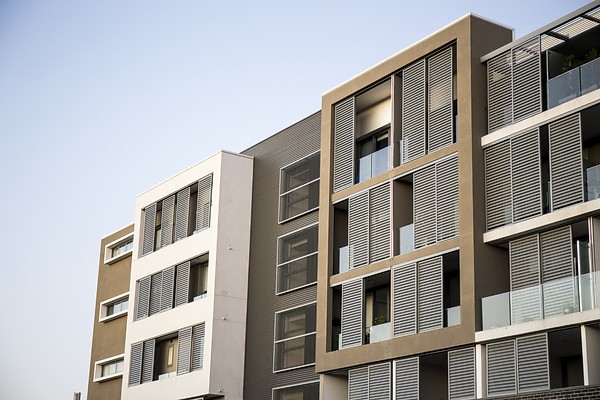
Noise and Timber Flooring Rules in Newtown, Enmore and Marrickville Strata
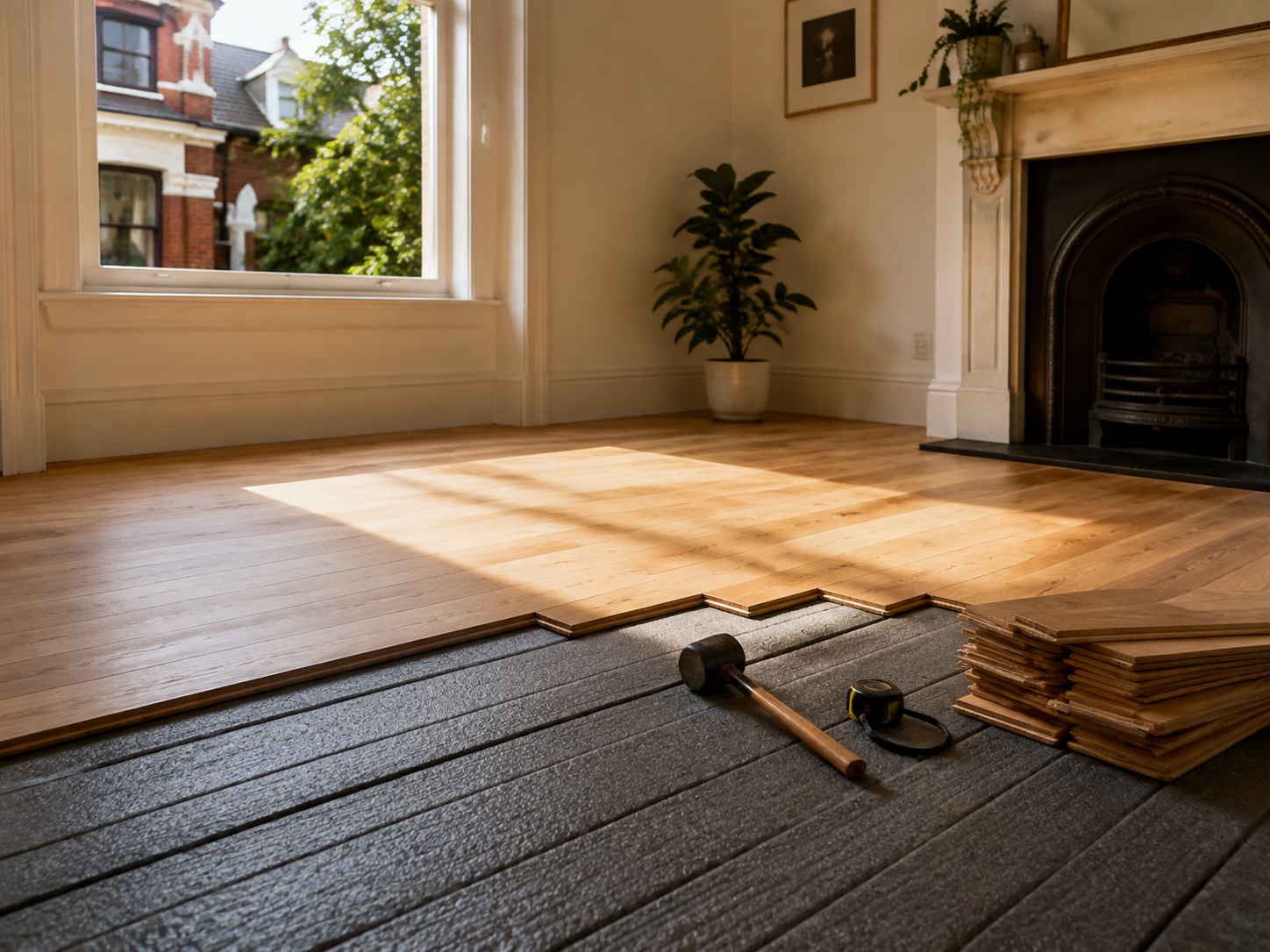
Acoustic certificates, renovation approval and by-law enforcement in Inner West apartments
Apartment living is part of the character of Newtown, Enmore and Marrickville. Across the area, older brick walk-ups, converted buildings, shop-top housing and newer apartment developments sit close to King Street, Enmore Road, Marrickville Road, Illawarra Road and busy neighbourhood centres. These buildings offer location and personality, but they also place people above, below and beside one another - sometimes with floor and ceiling systems that were never designed for today's preference for hard-surface finishes.
Timber, engineered board, laminate, hybrid and polished floors can look excellent and be easier to maintain than carpet. The problem is rarely the appearance of the floor. It is the acoustic outcome. Footfall, dropped objects, moving chairs and children's play can travel through a slab, timber joists, walls and service penetrations. What sounds ordinary inside the renovated lot may be sharp, repetitive and disruptive in the apartment below.
Flooring disputes can become personal very quickly. The owner upstairs may believe the product was sold as 'acoustic'. The resident below may be losing sleep or unable to work from home. The strata committee may be asked to decide between competing accounts without the renovation approval, installation details or acoustic evidence needed to reach a fair conclusion.
A better approach begins before the carpet is removed. The lot owner should check the registered by-laws, obtain the correct strata approval, provide meaningful acoustic information and use an installer who understands apartment construction. If a complaint later arises, the owners corporation should investigate it consistently, preserve evidence and focus on the noise pathway rather than personalities.
Key point
A product brochure for acoustic underlay is not the same as evidence that the completed floor will perform appropriately in a particular building. The slab or timber structure, ceiling below, floor build-up, perimeter detailing and installation quality all influence the result.
Why floor noise is a particular Inner West issue
Newtown, Enmore and Marrickville contain a varied building stock. A small 1960s or 1970s walk-up may have a concrete slab with limited acoustic separation. A converted warehouse or commercial building may have unusual spans, junctions and exposed surfaces. A Victorian or Federation-era conversion may rely on timber joists and lightweight ceilings. A modern apartment may perform differently again, particularly if the original tested floor system has been altered.
The surrounding neighbourhood can also be acoustically active. Enmore Road became NSW's first Special Entertainment Precinct in 2023, and Inner West Council expanded the precinct model in 2025 to other nightlife areas, including parts of Marrickville. External entertainment sound, traffic, aircraft, building services and internal impact noise may overlap, but they are not automatically governed through the same process. A complaint about footsteps from the lot above is usually a strata issue. A complaint about a commercial venue, air-conditioning plant or construction activity may involve Council, police or another regulator as well as the scheme.
This distinction matters. An owners corporation should avoid promising to solve every sound heard in an apartment through a flooring by-law. It should first identify the likely source, the applicable rule and the evidence required.
Impact noise, airborne noise and structure-borne noise
Not all apartment noise travels in the same way. Understanding the difference helps a committee commission the right investigation.
Impact noise is created when an object strikes or moves across a surface. Footsteps, heels, chairs, pet claws, toys and dropped items are common examples. Hard floors can make impact energy more noticeable if the isolation system is inadequate.
Airborne noise includes voices, music and television. It primarily travels through air, but can pass through lightweight walls, ceilings, doors, gaps and penetrations.
Structure-borne noise travels through the building fabric. A floor fixed rigidly to a slab, a skirting board bridging an isolation layer, or services contacting framing can transmit vibration beyond the room where it began.
A resident's noise diary can help identify the pattern, but an appropriately qualified acoustic consultant may be needed to separate these pathways and assess the completed construction. Phone recordings can assist with timing and character, yet their automatic volume control means they should not be treated as a calibrated acoustic test.
What NSW strata law says about timber and other hard floors
Hard flooring is generally a minor renovation
Under section 110 of the Strata Schemes Management Act 2015, installing or replacing wood or other hard floors is generally treated as a minor renovation. Current NSW Government guidance also includes removing carpet to expose an underlying wooden or hard floor. Minor renovations require approval; laying carpet is listed separately as cosmetic work that generally does not need owners corporation approval.
Approval is ordinarily obtained by a resolution of the owners corporation at a general meeting. A scheme may adopt a by-law delegating minor-renovation decisions to the strata committee. The scheme's registered by-laws must be checked because they may change the approval pathway or require particular documents.
NSW Government guidance updated on 22 June 2026 says that an application should include plans and work times, contractor details and, for flooring, an acoustic certificate showing sound insulation. If a strata committee is authorised to decide and refuses a minor renovation, it must give written reasons within three months. If it does not refuse within that period, the application is taken to be approved by the committee. The owners corporation must retain the record of an approved minor renovation for 10 years.
By-laws and peaceful enjoyment
Many residential schemes have a by-law dealing with floor coverings. The NSW model floor-coverings by-law requires floor space to be covered or otherwise treated sufficiently to prevent floor noise likely to disturb another resident's peaceful enjoyment, with stated exceptions for kitchens, laundries, lavatories and bathrooms. A model by-law is not automatically the operative wording for every building: the consolidated by-laws registered for the particular scheme must be reviewed.
The Act also restricts an owner or occupier from using a lot or common property in a way that causes a nuisance or hazard to another lot's occupier, or unreasonably interferes with another person's use or enjoyment of common property. Depending on the facts, a flooring dispute may therefore involve renovation approval, a floor-covering by-law, a general noise by-law and statutory nuisance provisions.
Approval does not guarantee the final acoustic outcome
An owners corporation can approve a proposed product and installation method, but the finished work must still comply with the approval conditions and applicable by-laws. Conversely, a complaint does not prove a breach merely because the floor is timber. The question is whether the installed system and the resulting noise meet the scheme's actual requirements when assessed on the available evidence.
What a strong flooring application should contain
A clear application protects the lot owner, the neighbour below and the owners corporation. For a Newtown, Enmore or Marrickville apartment, it should address the building rather than relying only on a generic product brochure.
Describe the existing and proposed floor. Identify the rooms, existing carpet or finish, slab or structural base if known, new product, underlay, adhesives, trims and skirtings.
Provide a marked-up plan. Show the extent of the work and any areas that will remain carpeted, including bedrooms, corridors and stairs inside the lot.
Explain the acoustic system. Include the flooring and underlay specifications, acoustic test information, proposed installation method and any advice from an acoustic consultant.
Identify the contractor. Provide licence and insurance details where relevant, contact information, proposed work dates and expected noisy-work periods.
Address perimeter and junction details. Explain how the floating or isolated system will avoid rigid contact at walls, skirtings, door frames, kitchen joinery and service penetrations.
Accept sensible access and protection conditions. The scheme may reasonably regulate common-property access, lift or stair protection, waste removal, work hours and responsibility for damage.
Confirm post-installation evidence. Where risk is elevated, approval may reasonably require photographs during installation, installer certification or building-specific acoustic testing after completion.
Acoustic ratings: avoid choosing a number without context
Flooring products are often marketed with laboratory acoustic results. Those results can help compare systems tested under the stated conditions, but an apartment building is not a laboratory specimen. A product tested on one slab thickness with one ceiling and installation method may not produce the same performance on an older Inner West floor construction.
A scheme should be cautious about copying a rating from another building or relying on a sales claim such as 'meets strata requirements'. There is no single product label that overrides the scheme's by-laws or guarantees that neighbours will not be disturbed. If a by-law specifies an acoustic target, an acoustic consultant should confirm how it is measured, whether it is suitable for the building and what evidence will demonstrate compliance.
For higher-risk work - including removal of carpet across most of an upper-floor apartment, a lightweight timber-framed building or a history of complaints - building-specific advice before installation can be far less expensive than removing and rebuilding the floor later.
Reasonable approval conditions for an owners corporation
Section 110 allows approval of a minor renovation to be subject to reasonable conditions. Conditions should respond to genuine building, acoustic and common-property risks rather than operate as an informal ban on hard flooring.
- Compliance with the submitted floor and acoustic system, with no substitution without further written approval.
- Installation by a suitably experienced and insured contractor in accordance with the manufacturer's specification.
- Specified work hours, resident notice, common-property protection and prompt removal of building waste.
- No cutting, drilling, levelling or fixing that affects common property beyond the approved scope.
- Photographic records of the prepared substrate, underlay, taped joints, perimeter isolation and completed installation.
- Access on reasonable notice to inspect the work or investigate a substantiated complaint.
- Rectification at the lot owner's cost if the work does not match the approval or results in a proven breach.
- Ongoing responsibility for maintaining the approved floor and any acoustic treatment where legally appropriate.
A blanket demand for a particular brand, an impossible level of silence or evidence unrelated to the building may be difficult to justify. Clear reasons, consistent criteria and qualified advice make the decision more defensible.
What if the timber floor is already installed?
An unapproved floor should not be ignored, but the scheme should first establish what occurred. Ask when the work was completed, whether an earlier approval exists, what was removed, which system was installed and whether the lot has changed ownership. Search the minutes, correspondence, by-laws and renovation register before assuming there is no approval.
The owners corporation may invite a retrospective application supported by installation and acoustic evidence. Retrospective approval does not prevent the scheme from requiring investigation or rectification if the work causes a breach. If the system cannot be verified because the underlay is concealed, targeted inspection or acoustic testing may be appropriate.
Immediate demands to remove an entire floor can escalate the dispute and expose the scheme to unnecessary cost. Equally, asking the affected resident to tolerate persistent impact noise indefinitely is not a solution. The response should be proportionate to the evidence and follow the scheme's decision-making and enforcement powers.
A practical process for handling a flooring noise complaint
NSW Government and Inner West Council guidance both encourage an initial respectful conversation where appropriate. Inner West Council also directs strata residents to their strata manager because Council does not enforce a scheme's by-laws. A well-managed complaint can then follow a documented sequence.
Check immediate risk. Urgent threats, aggressive conduct or serious after-hours disturbance may require police or another emergency response. Ordinary floor-noise complaints usually begin through the strata process.
Record the pattern. Keep a diary with dates, start and finish times, room, type of sound, frequency and effect. Distinguish footsteps and moving furniture from music, plumbing, building services or external venue noise.
Review the registered by-laws and approval records. Identify the exact clauses that may apply and obtain the flooring application, conditions, plans, product data and contractor information.
Contact the resident constructively. Explain the reported pattern without exaggeration or accusation and ask whether simple interim measures - felt pads, rugs, soft footwear or moving furniture - can reduce the immediate impact.
Investigate the likely source. Compare accounts, inspect where appropriate and consider whether the source could be pipes, doors, gym equipment, a washing machine, common-property services or another lot.
Obtain qualified acoustic advice when needed. The consultant should receive the by-law, approval conditions, building information and complaint history, and should explain the method and limitations of any testing.
Make a recorded decision. The committee or owners corporation should state what has been established, what remains uncertain, what action is required and the timeframe for response.
Escalate through the proper process. If a by-law breach continues, the authorised body may issue the prescribed notice to comply. Fair Trading mediation and, if necessary, NCAT processes may follow.
Evidence that helps - and evidence that can mislead
Helpful: a contemporaneous noise diary; consistent written complaints; witness accounts; renovation approvals; installer records; dated photographs; floor plans; calibrated acoustic testing; and clear correspondence showing attempts to resolve the problem.
Limited on its own: a phone decibel app, a short recording with no time or location context, a product marketing sheet, an undated video, or a general statement that the building is 'always noisy'.
Potentially harmful: repeated confrontations, retaliatory noise, public accusations, entering another lot without consent, or circulating private allegations to the whole building.
The owners corporation is not required to accept every allegation at face value, but it should not dismiss a consistent complaint merely because only one apartment is affected. Floor-noise transmission is directional; the lot directly below may be the only place where the problem is severe.
Owners, tenants and managing agents: who does what?
The lot owner installing the floor
The owner should obtain approval before work begins, ensure the application is accurate, comply with conditions, supervise the contractor and retain product and installation records. If the apartment is leased, the owner remains central to addressing the physical flooring system.
The tenant or occupier
Residents must comply with the scheme's by-laws. A tenant should report an unresolved issue to the landlord or managing agent as well as following the building's complaint process. Everyday conduct can affect impact noise, but behavioural measures should not be used to conceal an inadequate or non-compliant floor installation.
The strata committee and owners corporation
They should apply the registered by-laws consistently, keep renovation records, decide applications through the correct authority, investigate credible complaints and record enforcement decisions. A notice to comply must identify the relevant by-law and be issued by a body or person with the necessary authority.
The strata managing agent
The strata manager can coordinate applications, meeting papers, records, correspondence, access, consultants and formal notices within the agency agreement and delegations. The manager does not replace the acoustic consultant, legal adviser or owners corporation decision-maker.
Noise from nightlife, traffic and building services
Living near King Street, Enmore Road or Marrickville's entertainment and dining areas can involve a broader sound environment. Inner West Council's Special Entertainment Precinct framework is intended to support nightlife while managing sound responsibilities. New residential and other sensitive development in and around those precincts is expected to address soundproofing through planning controls.
Council publishes time restrictions and complaint pathways for certain residential and neighbourhood noise sources, including power tools, amplified equipment, air conditioners and vehicles. It also states that Council has no jurisdiction to enforce strata by-laws. This is why a complaint should be directed to the right channel: internal floor impact may be a strata matter; venue or mechanical-plant noise may require Council involvement; and urgent after-hours incidents may be a police matter.
Where more than one source is present, an acoustic consultant can help avoid a dispute being pursued against the wrong apartment or under the wrong by-law.
How Inner West strata schemes can prevent disputes
- Maintain a current consolidated set of registered by-laws and give owners a plain-language renovation checklist.
- Adopt a lawful minor-renovation delegation if the scheme wants the committee to decide routine flooring applications efficiently.
- Use consistent application requirements while allowing building-specific acoustic advice where the risk warrants it.
- Keep approvals, plans, certificates, photographs and conditions together for at least the required retention period.
- Record the existing floor type when a lot is inspected for another approved project or when reliable records become available.
- Provide a complaint form that asks for dates, times, location, duration, character and steps already taken.
- Use neutral correspondence and a staged enforcement procedure rather than allowing informal email arguments to become the evidence file.
- Review older flooring by-laws with a strata lawyer if they use unclear, obsolete or technically rigid language.
Frequently asked questions
Can I replace carpet with timber flooring without strata approval?
Usually not. Installing or replacing wood or other hard flooring, and removing carpet to expose hard flooring, are generally minor renovations requiring approval. Check the registered by-laws and approval pathway before work starts.
Is an acoustic underlay certificate enough?
It may be part of the application, but it does not necessarily prove how the completed floor will perform in your building. The construction, installation method and junction details matter. Building-specific advice or post-installation testing may be appropriate.
Can the strata committee approve timber floors?
Only if the owners corporation has lawfully delegated minor-renovation decisions through a by-law. Otherwise the application generally needs to go to a general meeting.
Can an owners corporation ban all timber flooring?
A scheme can regulate flooring and impose reasonable approval conditions, but section 110 says approval of a minor renovation must not be unreasonably withheld. The effect of any proposed ban or existing by-law should be reviewed by a strata lawyer.
Does a rug fix a non-compliant floor?
Rugs and felt pads may reduce noise and can be useful interim measures, but they do not automatically cure an inadequate installation or satisfy an approval condition across the whole floor.
What should I include in a noise complaint?
Provide dates, times, duration, the room where it is heard, the type and frequency of sound, its impact and any respectful steps already taken. Attach relevant recordings or witness details without overstating what they prove.
Can Council enforce our strata noise by-law?
No. Inner West Council states that it has no jurisdiction over strata by-laws and directs strata residents to their strata manager. Council may still deal with noise sources within its environmental-health powers.
What happens after a notice to comply?
If the same by-law breach continues, the owners corporation may seek a civil penalty or pursue mediation and an NCAT compliance order, depending on the chosen pathway. Use the prescribed notice and obtain advice for contested matters.
Can NCAT fine someone for breaching a by-law?
NSW Government guidance current at 22 June 2026 states that NCAT can make orders and impose penalties, including up to $1,100 for a breach, with higher amounts for continuing breaches or failure to comply with a previous order.
Should the upstairs owner pay for acoustic testing?
Responsibility depends on the by-law, approval conditions, evidence and purpose of the investigation. The scheme should decide funding and potential recovery with proper advice rather than assume the outcome before the source is established.
How ETSM supports Inner West strata communities
Good strata management does not turn a noise complaint into a contest between neighbours. It creates a fair process: checking authority, finding the registered by-laws and renovation records, asking for usable evidence, arranging properly scoped advice and ensuring decisions are documented.
ETSM works with owners corporations and strata committees across Sydney, including the Inner West, to manage schemes from 3 to 100 lots. Our approach is practical and responsive, with a focus on clear communication, accurate records and properly authorised decisions. For buildings in Newtown, Enmore, Marrickville and surrounding suburbs, that can include coordinating flooring applications, committee decisions, resident correspondence, acoustic consultants, mediation preparation and lawful enforcement steps.
If your scheme is dealing with repeated floor-noise complaints, unclear renovation records or a by-law that no longer suits the building, the first step is to organise the facts. A well-run process can protect quieter apartment living without treating ordinary household activity as misconduct or allowing unapproved work to remain unresolved.
Suggested calls to action
Managing a timber-flooring dispute in Newtown, Enmore or Marrickville? Ask ETSM about a practical strata management proposal for your building.
Does your committee need a clearer flooring application and complaint process? Talk to ETSM about improving records, approvals and communication.
Considering a change of strata manager? Send ETSM your current agreement, consolidated by-laws and key building priorities for a confidential initial discussion.
For help organising by-law records, renovation enquiries and committee communication, learn more about our local strata management team serving Marrickville, Newtown and Enmore.
Authoritative references
NSW Government - Noise in strata: https://www.nsw.gov.au/housing-and-construction/strata/living/noise
NSW Government - Strata renovation rules: https://www.nsw.gov.au/housing-and-construction/strata/living/renovations
NSW Government - Strata by-laws: https://www.nsw.gov.au/housing-and-construction/strata/living/by-laws
NSW Government - Strata disputes: https://www.nsw.gov.au/housing-and-construction/strata/disputes
NSW Legislation - Strata Schemes Management Act 2015: https://legislation.nsw.gov.au/view/whole/html/inforce/current/act-2015-050
NSW Legislation - Strata Schemes Management Regulation 2016: https://legislation.nsw.gov.au/view/html/inforce/current/sl-2016-0501
Inner West Council - Noise: https://www.innerwest.nsw.gov.au/environmental-health/noise
Inner West Council - Special Entertainment Precincts: https://www.innerwest.nsw.gov.au/business-support/special-entertainment-precincts
General information only. This article is current to 2nd September 2026 and is not legal, acoustic, building, planning, insurance or financial advice. By-laws, lot boundaries, approvals and noise pathways differ between schemes. Owners corporations and lot owners should check current official guidance and obtain appropriately qualified advice for their circumstances.